
AI Models vs Real Models: Cost, Speed and Quality Compared (2026)
AI fashion model or real model for your visuals? A detailed comparison of cost, speed, quality and flexibility — with a recommended hybrid approach.
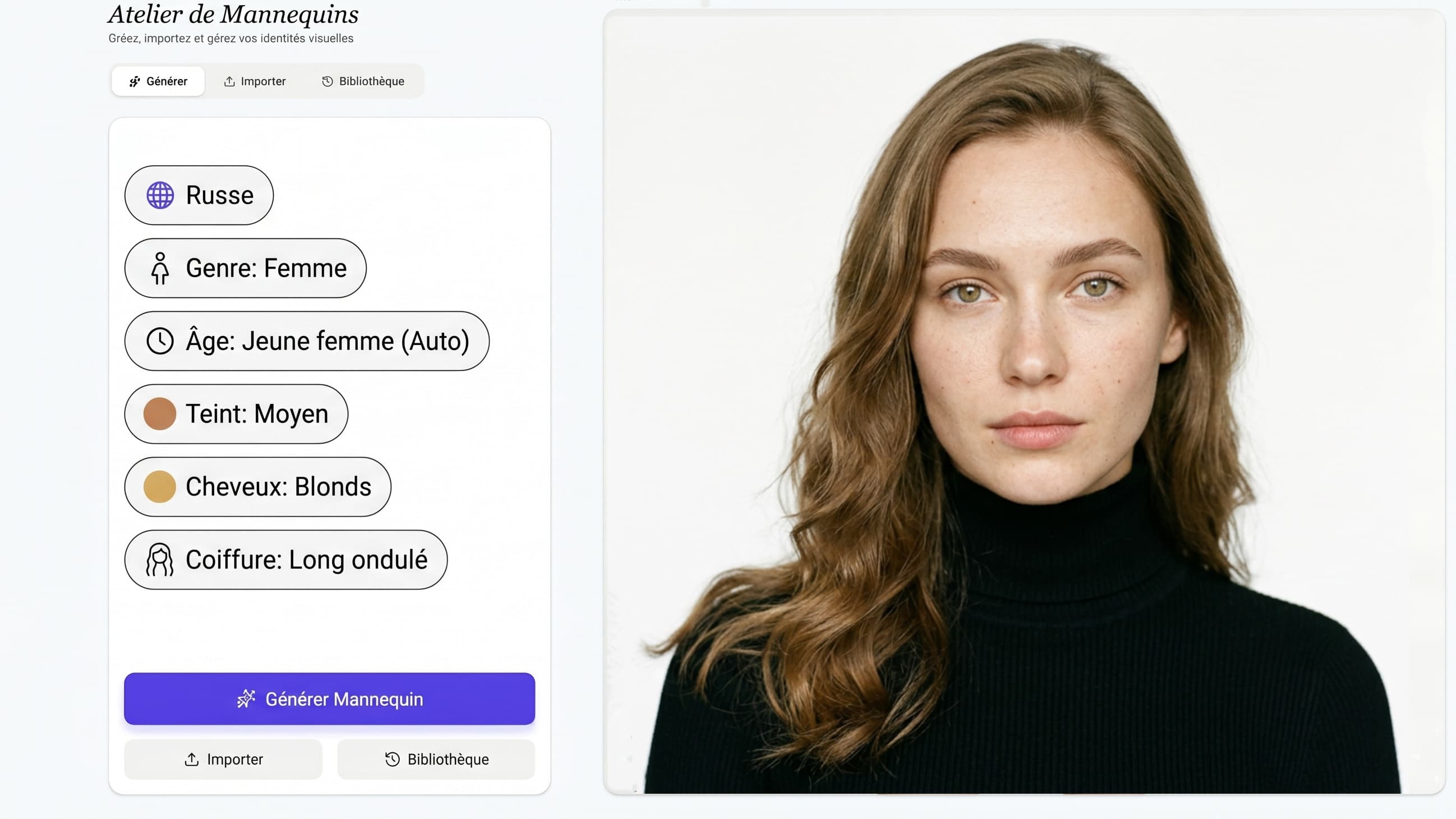
Should you hire a real model or generate an AI model for your fashion visuals? It's one of the most defining decisions for a brand or e-commerce seller today. The short answer: for the majority of e-commerce visuals, the AI model wins on cost and speed while reaching studio-grade quality. For iconic brand campaigns, real shoots keep an emotional edge. Most brands ultimately settle on a hybrid approach.
Let's compare both options in detail.
Comparison table: AI model vs real model
| Criterion | AI model | Real model |
|---|---|---|
| Cost per visual | A few cents to a few dollars | Tens to hundreds of dollars (shoot amortized) |
| Turnaround | A few seconds | Several days (casting, studio, retouching) |
| Diversity | Up to 195 nationalities on demand | Limited to available casting |
| Consistency | Identical across the collection (Identity Lock) | Varies from one session to another |
| Variations | Unlimited poses, backgrounds, video, 360° | Re-shoot required |
| Logistics | None (100% online) | Studio, crew, scheduling |
| Emotional / storytelling value | Good, but standardized | Excellent for signature campaigns |
Cost: where the gap is widest
A traditional shoot stacks up many line items: model fee, photographer, studio, styling, retouching. Even spread across dozens of visuals, the unit cost stays high.
💡 The real math: a brand producing 200 visuals per month can go from several thousand dollars of shooting to a fraction of that with AI models — a production cost reduction of up to 90%.
This is precisely the argument pushing small and mid-size brands toward AI: getting a "big-brand" look without the matching studio budget.
Speed: from product to live page the same day
With a real model, you have to lock a schedule, book the studio, wait for retouching. With an AI model, the cycle shrinks to: upload the garment photo → choose the model → generate. A new product can be live the same day it arrives.
This velocity changes how you work: you can test several versions of a product page (different model, different pose, different background) and keep the best performer.
Quality: what makes the difference
The quality of an AI model depends on three factors:
- Material accuracy — a strong engine renders denim, silk and knit correctly, without distorting logos or patterns.
- Consistency — thanks to Identity Lock, the same face and body return across the whole collection.
- Finishing — clean background removal, 4K upscaling, crisp backgrounds for marketplaces.
On these three points, specialized platforms like ClothesLook reach a level that's directly usable on a product page, with no extra retouching step.
Diversity: a structural advantage of AI
Where a real casting is limited by available profiles, the AI model offers diversity on demand: up to 195 nationalities, different body types and skin tones. It's a powerful asset for localizing visuals by market — the same garment presented by a model tailored to each target audience.
The recommended hybrid approach
The best strategy isn't binary. Many brands combine:
- AI models for volume: product pages, variations, seasonal catalogs, social content.
- Real models for hero moments: launch campaigns, brand image, editorial.
This approach maximizes the quality/cost ratio: AI absorbs the bulk of production, while real shoots focus where they add the most value.
Conclusion: when to choose what?
- Choose the AI model if your priority is cost, speed, volume and diversity — i.e. the vast majority of e-commerce needs.
- Keep the real model for signature campaigns where emotion and storytelling come first.
- Adopt the hybrid to get the best of both worlds.
ClothesLook lets you generate AI models (up to 195 nationalities), lock their identity across a full collection, then derive poses, backgrounds, videos and 360° views. Compare plans, the AI model generator and virtual try-on. For the basics, also read What Is Virtual Try-On?.
Frequently asked questions
For the vast majority of e-commerce visuals (product pages, variations, seasonal catalogs), yes. Real models still matter for emotionally-driven brand campaigns. Many brands adopt a hybrid approach: AI for volume, real shoots for hero moments.