
Reduce Size-Related Returns With AI: Show the Right Fit (2026)
Wrong size is the #1 cause of fashion returns. How AI models of varied body shapes and accurate visuals cut size returns by up to 40%.
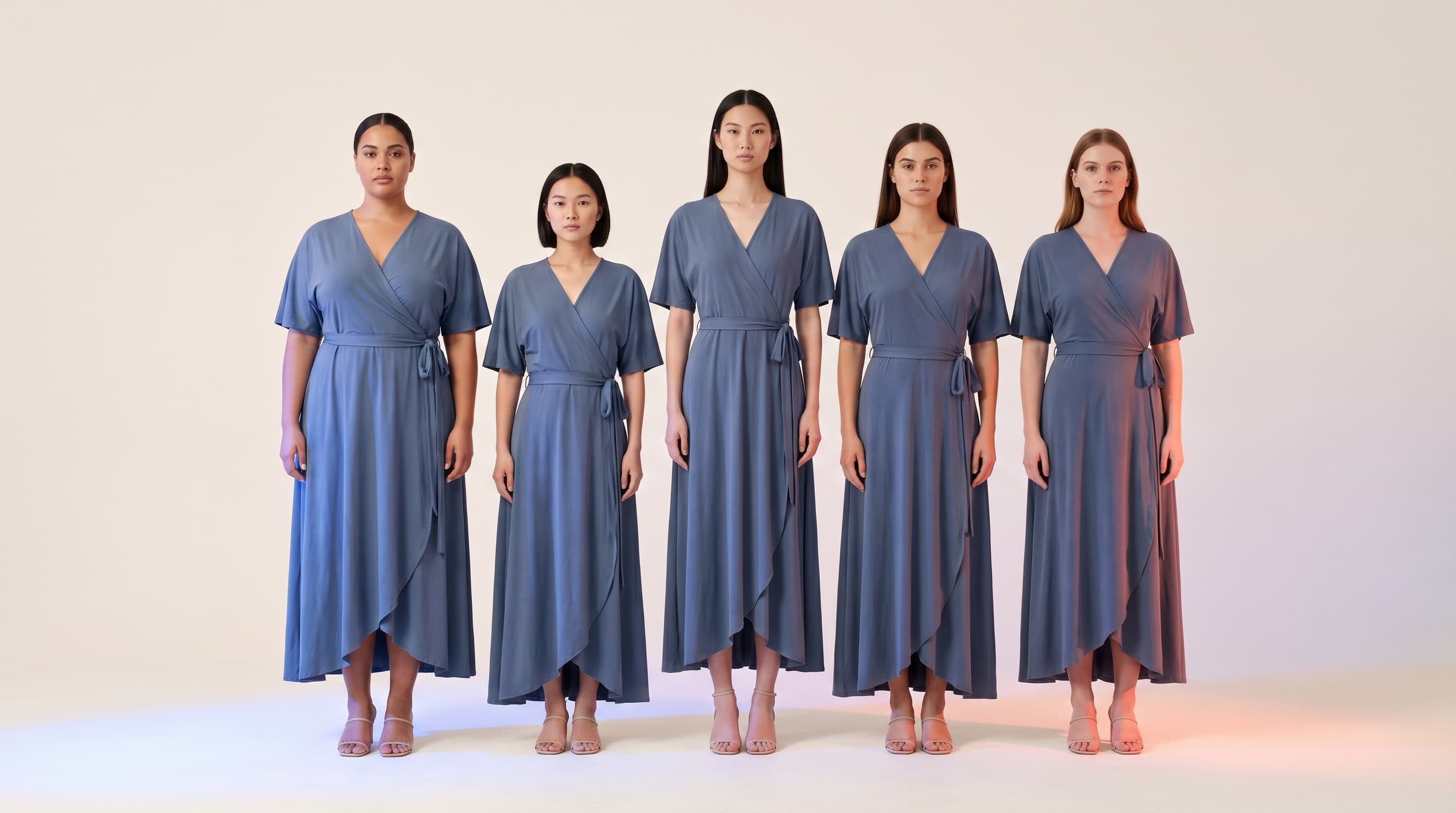
The #1 cause of returns in fashion e-commerce is wrong size or poor fit. By showing a garment worn on AI models of varied body shapes, the buyer visualizes the real result on a body close to their own, reducing pre-purchase uncertainty. Combined with accurate visuals and a clear size guide, this lever cuts fit-related returns by up to around 40%.
This article explains why sizing drives so many returns, how well-designed AI visuals lower that rate, and the concrete levers to activate.
Why does sizing drive so many returns?
In fashion, the return rate often reaches 30 to 40%, far higher than in other sectors. The main reason: the buyer can't try the item on. They order based on a photo, sometimes shot on a single standard model, and discover on delivery that:
- the garment fits differently from what they imagined;
- the cut doesn't match their body shape;
- the drape is different on their body than on the product-page model.
Each return is costly: reverse logistics, restocking, sometimes an unsellable product. Reducing size returns directly protects your margin.
How AI visuals reduce size uncertainty
Uncertainty comes from missing visual information. AI fills that gap without multiplying shoots:
- Models of varied body shapes: showing the same garment on several bodies (slim, athletic, plus size) helps each customer picture themselves.
- Realistic on-model visuals: faithful drape, folds and fit give an accurate sense of the cut.
- Video and 360°: motion reveals volume, length and fabric behavior better than a still photo.
- Model consistency: the same reference model across the page lets buyers compare sizes against each other.
When the model resembles the customer, purchase intent can rise by around +200% — and satisfaction follows, because the product received matches expectations.
The concrete levers to activate
| Lever | Effect on returns | How to activate with AI |
|---|---|---|
| Realistic on-model visual | Reduces "it doesn't hang as expected" | Generate the garment on an AI model |
| Varied body shapes | Reduces "not right for my body" | Render the visual on several profiles |
| Video / 360° | Reduces doubt about volume and length | Animate the on-model visual |
| Visual size guide | Reduces measurement error | Illustrate sizes on the same model |
| Consistent face | Eases comparison across products | Lock a reference model |
Activated together, these levers stack: it's the combination that drives the strongest return reductions.
The virtuous effect: fewer returns, more margin
Reducing size returns triggers a virtuous cycle:
- lower logistics costs (return shipping, handling, restocking);
- more sellable products (a non-returned garment stays new and available);
- better customer satisfaction (the product received matches), hence more loyalty;
- less environmental impact (every avoided return cuts the logistics footprint).
This is the direct extension of our article on reducing returns with AI, applied here to the size factor.
In summary
Wrong size is the #1 cause of fashion returns. Showing the garment on AI models of varied body shapes, with realistic visuals and video, reduces uncertainty and fit returns by up to around 40%, while boosting purchase intent.
Want to act on your returns? Explore ClothesLook or read our guide on diverse AI fashion models.
Frequently asked questions
Wrong size or poor fit. A large share of fashion returns come from the garment not hanging the way the buyer imagined: too big, too small, an unexpected cut. It's the number-one lever to act on to reduce returns.